posted in

16 Ways I’ve Used Instinct AI Without Sharing My Private Info👇


Some people are treating AI privacy as an all-or-nothing decision.

It isn’t.

Here are the top 16 Ways I’ve Used Instinct Without Sharing Sensitive Personal Information

You can get real value from an AI assistant without handing it passwords, payment details, private client files, health records, confidential contracts, or anything else that could materially harm you if exposed.

Here are 16 ways I’ve actually used Instinct using public information, creative inputs, non-sensitive business context, or limited personal details I considered proportionate to the task.

1. Researched every Funnel Hacking Live speaker

I shared the public speaker page. Instinct built a briefing book with executive summaries, achievements, useful frameworks, questions to ask, public rapport facts, and sources.

Privacy posture: public speaker pages, interviews, podcasts, and other public sources.

2. Built the FHL schedule

Instinct pulled the official public schedule and organized all 17 event blocks in Las Vegas time.

Privacy posture: public event information. No sensitive personal data was needed.

3. Researched a coaching bootcamp before I bought it

It checked the public offer, pricing, curriculum, outside feedback, refund terms, and tier differences. When my screenshots proved transcripts were VIP-only, it corrected its recommendation.

Privacy posture: public sales material and screenshots of the offer, not credentials or payment data.

4. Investigated WebinarCon replay options

It checked the site, checkout, FAQ, refund terms, previous replay offers, and organizer posts. It found no current replay-only offer and advised me not to pay $1,999 just for recordings.

Privacy posture: public-source purchase research.

5. Drafted the exact WebinarCon question

When public research could not settle the replay question, Instinct wrote a concise inquiry covering price, included sessions, release timing, access duration, downloads, and deadlines.

Privacy posture: the draft disclosed only that I could not attend.

6. Helped during an airline disruption

I shared my route, flight details, seat situation, and travel constraint. Instinct tracked the inbound aircraft, found alternate routes, verified downgrade rights, and reduced a chaotic situation to a prioritized request for the gate agent.

Privacy posture: itinerary details are personal information, but I consider them low sensitivity and proportionate to the value. I did not share passwords, card details, or identity documents.

7. Researched a public marketing system

I asked it to study a UgenticAI speakers approach and assess what WBS could learn from it.

Privacy posture: public material plus ordinary business context.

8. Turned a fictional character into a short ad

I gave it the AI Hype Bro concept and asked for a 30-second script that made exaggerated AI job-loss fear look ridiculous.

Privacy posture: creative work using fictional material.

9. Turned the same idea into a comic

Instinct developed the concept visually and revised it into a cleaner grid after my feedback.

Privacy posture: supplied artwork and public-facing messaging.

10. Built a fact-based campaign about AI in education

It researched school AI bans, weak cheating arguments, international comparisons, and false positives from AI detectors.

Privacy posture: public policy, reporting, and published research. No student records.

11. Identified the real audience for that campaign

It helped move the strategy beyond educators toward parents and grandparents who can question school policy.

Privacy posture: public advocacy strategy, not private family or school data.

12. Pressure-tested a viral AI content idea

I shared an idea from a dinner conversation. Instinct challenged my assumptions and developed recurring concepts such as "Viral AI Claim: True or Trash?"

Privacy posture: I shared the idea, not private details about the people at dinner.

13. Applied a public business framework to WBS

I pasted a public post about generating more revenue with less effort. Instinct applied its risk, effort, and options filter to the AI Insiders conversion bottleneck.

Privacy posture: high-level business context. No customer list, payroll, financial statements, or private contracts.

14. Extracted and organized books from public material

Instinct identified and categorized 116 books from an official influencers free lead magnet guide and returned usable Markdown and CSV files.

Privacy posture: public source material.

15. Fact-checked a breaking news claim

I asked about reports involving a restrained airline passenger and a writer. Instinct separated verified identity from unproven claims about motive.

Privacy posture: public news research.

16. Audited criticism about Instinct itself

I asked it to assess The Atlantic’s security concerns, separate reported control failures from demonstrated exploits, and help me develop practical guardrails.

Privacy posture: public journalism, policies, and safer-use practices.

The point is not that privacy does not matter.

The point is that "AI can create privacy risk" does not mean "every useful AI task requires sensitive data."

A lot of the value comes from giving it a public link, a public question, a creative idea, non-sensitive business context, or limited personal details that are proportionate to the task.

Use judgment. Keep sensitive information out when the task does not need it. Put hard approval gates around communication, money, bookings, cancellations, and destructive actions.

But do not confuse the need for guardrails with a reason to avoid the tool.

What things are you ask your AI tools to do that don’t involve privacy concerns?👇

16 Ways I’ve Used Instinct AI Without Sharing My Private Info👇

posted in

THINKING AI and DOING AI are not the same thing.

If you are using one AI model for everything, you are probably asking it to do two very different jobs.

THINKING work and DOING work are not the same thing.

Strategic planning, consulting, diagnosing a problem, making recommendations and designing a workflow all require stronger reasoning.

That is where premier models belong.

They help you work through the messy part. The part where the answer is not obvious and the quality of the thinking matters.

But once the plan is clear, the job changes.

If the task has clear instructions, defined constraints and an expected output, a lower-cost capable model may be perfectly suitable for the implementation.

Notice the word capable.

Lower cost does not mean lower standards. You still need a model that can competently handle the work you assign to it.

I think about it like this:

You might use senior expertise to design the building.

That does not mean the senior architect needs to carry every brick.

The skilled crew still matters. They just do a different job.

The same principle applies to AI.

Use your strongest models where judgment, planning and complex reasoning matter most.

Then use appropriately capable models for clearly defined execution.

Do not assume a cheaper model can handle every task.

Do not assume a premier model is necessary for every task either.

Choose the model based on the job being performed.

That is the practical takeaway: stop asking one model to do everything. Route the work according to the level of thinking the work requires.

What AI work are you still paying a premium model to do that a lower-cost model could probably handle?

P.S. I am fully capable of overcomplicating a simple workflow. This is one of the ways I keep myself honest.

THINKING AI and DOING AI are not the same thing.

posted in

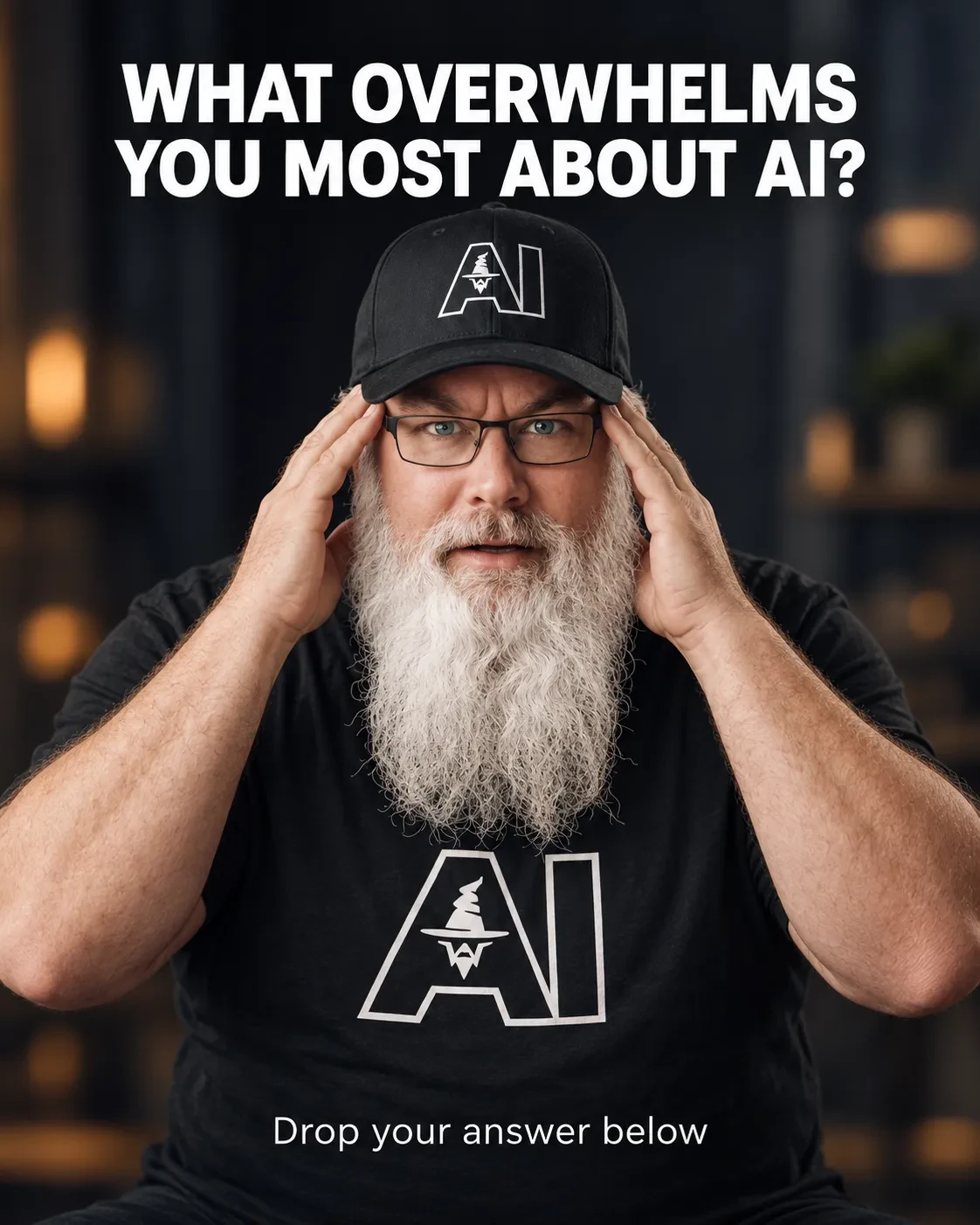
What overwhelms you most about AI?

I'm curious ... what overwhelms you most about AI? Share with me below👇

What overwhelms you most about AI?
Scroll to load more

Back

posted in

AI Discussion

16 Ways I’ve Used Instinct AI Without Sharing My Private Info👇


Some people are treating AI privacy as an all-or-nothing decision.

It isn’t.

Here are the top 16 Ways I’ve Used Instinct Without Sharing Sensitive Personal Information

You can get real value from an AI assistant without handing it passwords, payment details, private client files, health records, confidential contracts, or anything else that could materially harm you if exposed.

Here are 16 ways I’ve actually used Instinct using public information, creative inputs, non-sensitive business context, or limited personal details I considered proportionate to the task.

1. Researched every Funnel Hacking Live speaker

I shared the public speaker page. Instinct built a briefing book with executive summaries, achievements, useful frameworks, questions to ask, public rapport facts, and sources.

Privacy posture: public speaker pages, interviews, podcasts, and other public sources.

2. Built the FHL schedule

Instinct pulled the official public schedule and organized all 17 event blocks in Las Vegas time.

Privacy posture: public event information. No sensitive personal data was needed.

3. Researched a coaching bootcamp before I bought it

It checked the public offer, pricing, curriculum, outside feedback, refund terms, and tier differences. When my screenshots proved transcripts were VIP-only, it corrected its recommendation.

Privacy posture: public sales material and screenshots of the offer, not credentials or payment data.

4. Investigated WebinarCon replay options

It checked the site, checkout, FAQ, refund terms, previous replay offers, and organizer posts. It found no current replay-only offer and advised me not to pay $1,999 just for recordings.

Privacy posture: public-source purchase research.

5. Drafted the exact WebinarCon question

When public research could not settle the replay question, Instinct wrote a concise inquiry covering price, included sessions, release timing, access duration, downloads, and deadlines.

Privacy posture: the draft disclosed only that I could not attend.

6. Helped during an airline disruption

I shared my route, flight details, seat situation, and travel constraint. Instinct tracked the inbound aircraft, found alternate routes, verified downgrade rights, and reduced a chaotic situation to a prioritized request for the gate agent.

Privacy posture: itinerary details are personal information, but I consider them low sensitivity and proportionate to the value. I did not share passwords, card details, or identity documents.

7. Researched a public marketing system

I asked it to study a UgenticAI speakers approach and assess what WBS could learn from it.

Privacy posture: public material plus ordinary business context.

8. Turned a fictional character into a short ad

I gave it the AI Hype Bro concept and asked for a 30-second script that made exaggerated AI job-loss fear look ridiculous.

Privacy posture: creative work using fictional material.

9. Turned the same idea into a comic

Instinct developed the concept visually and revised it into a cleaner grid after my feedback.

Privacy posture: supplied artwork and public-facing messaging.

10. Built a fact-based campaign about AI in education

It researched school AI bans, weak cheating arguments, international comparisons, and false positives from AI detectors.

Privacy posture: public policy, reporting, and published research. No student records.

11. Identified the real audience for that campaign

It helped move the strategy beyond educators toward parents and grandparents who can question school policy.

Privacy posture: public advocacy strategy, not private family or school data.

12. Pressure-tested a viral AI content idea

I shared an idea from a dinner conversation. Instinct challenged my assumptions and developed recurring concepts such as "Viral AI Claim: True or Trash?"

Privacy posture: I shared the idea, not private details about the people at dinner.

13. Applied a public business framework to WBS

I pasted a public post about generating more revenue with less effort. Instinct applied its risk, effort, and options filter to the AI Insiders conversion bottleneck.

Privacy posture: high-level business context. No customer list, payroll, financial statements, or private contracts.

14. Extracted and organized books from public material

Instinct identified and categorized 116 books from an official influencers free lead magnet guide and returned usable Markdown and CSV files.

Privacy posture: public source material.

15. Fact-checked a breaking news claim

I asked about reports involving a restrained airline passenger and a writer. Instinct separated verified identity from unproven claims about motive.

Privacy posture: public news research.

16. Audited criticism about Instinct itself

I asked it to assess The Atlantic’s security concerns, separate reported control failures from demonstrated exploits, and help me develop practical guardrails.

Privacy posture: public journalism, policies, and safer-use practices.

The point is not that privacy does not matter.

The point is that "AI can create privacy risk" does not mean "every useful AI task requires sensitive data."

A lot of the value comes from giving it a public link, a public question, a creative idea, non-sensitive business context, or limited personal details that are proportionate to the task.

Use judgment. Keep sensitive information out when the task does not need it. Put hard approval gates around communication, money, bookings, cancellations, and destructive actions.

But do not confuse the need for guardrails with a reason to avoid the tool.

What things are you ask your AI tools to do that don’t involve privacy concerns?👇

16 Ways I’ve Used Instinct AI Without Sharing My Private Info👇